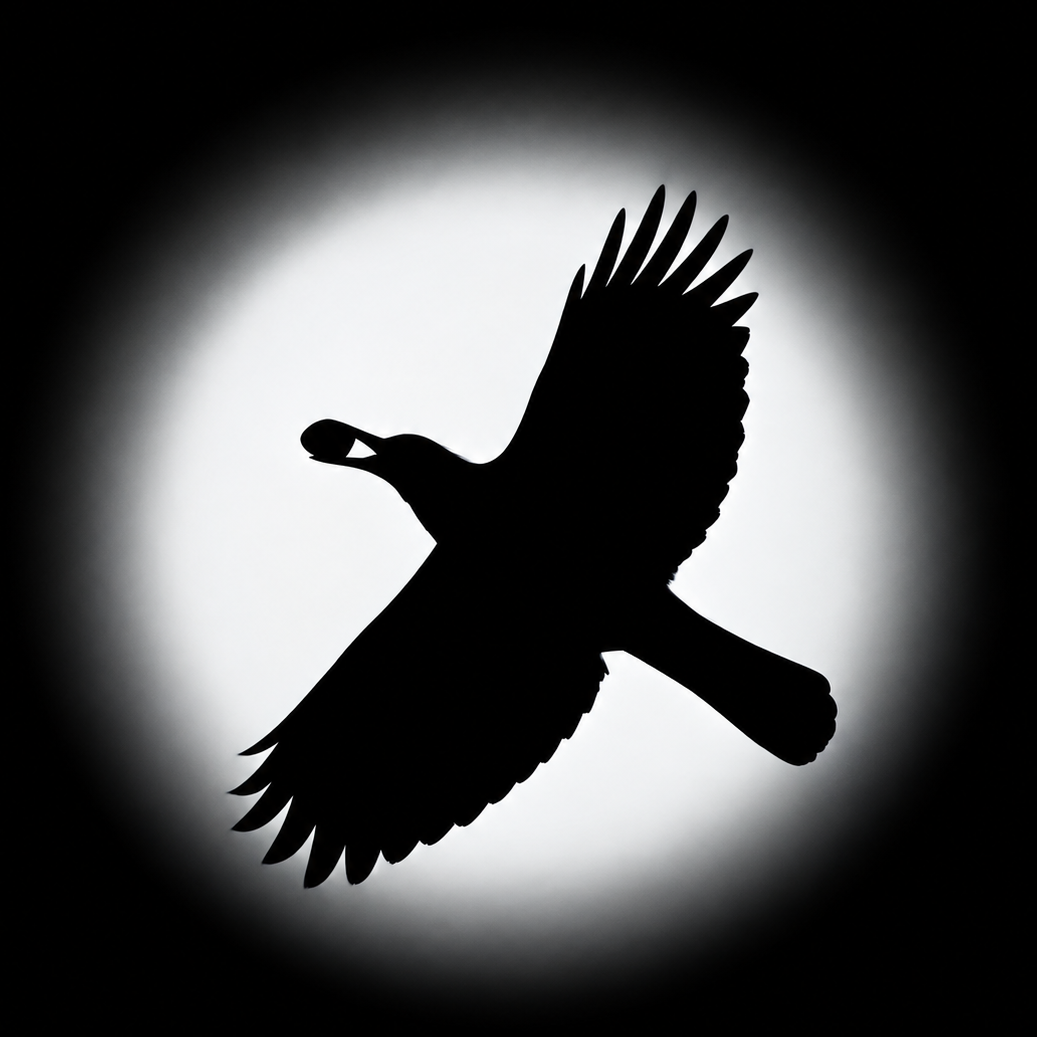
The Art of Sensing Wildlife

The wilderness reveals its secrets to those who learn to pay attention.
Wildlife photography is about much more than having a good camera and a long lens. Some of the most valuable wildlife photography tips come from learning to use all your senses. By paying attention to movement, sounds, smells and the smallest details in nature, you can discover wildlife that others might walk straight past.
Finding wildlife is rarely as simple as walking into a forest and looking around. Wild animals have spent millions of years perfecting the art of remaining unseen. Their senses are finely tuned, their camouflage can be extraordinary, and most will detect our presence long before we even suspect theirs. As wildlife photographers, we often become so focused on what we can see through our viewfinders that we forget something important.
The wilderness speaks to all our senses. We just have to learn how to listen.
Wildlife Photography Tips – Learn to Use Your Senses
Over the years, I’ve become increasingly aware of how differently I use my senses depending on the environment, the wildlife I’m searching for, and the conditions around me. And I’ve come to realize that successful wildlife photography isn’t just about having sharp eyes or expensive equipment. It’s about learning to read nature.
Sight — Learning to See the Unseen
Our eyes are remarkable tools, but spotting wildlife requires more than simply looking. When scanning the landscape, I’ve noticed that my attention is usually drawn to four things: movement, shape, color, and contrast.
Movement — The First Clue
Movement is often what gives an animal away. A slight twitch of an ear. A shadow slipping between the trees. A barely noticeable movement in the tall grass.
Our eyes are naturally programmed to detect motion, even at the edges of our vision. Sometimes, the smallest movement is enough to make us stop, turn our heads, and discover an animal we would otherwise have walked straight past.
Shape — Recognizing What Doesn’t Belong
When searching for a hare, my brain instinctively looks for something hare-shaped. The curve of a back, the outline of long ears, or the familiar silhouette of an animal crouching in the grass. But wildlife rarely makes things that easy. Animals often conceal themselves behind vegetation or adopt postures that break up their familiar outlines. A deer standing motionless among tree trunks can become almost invisible.
Learning to recognize fragments of an animal, rather than expecting to see its entire body, is an incredibly valuable skill.
Color — Nature’s Changing Camouflage
Camouflage is rarely perfect in every season. A red squirrel can almost disappear among the fiery orange and reddish leaves of an autumn forest. Yet the very same animal may stand out beautifully against the fresh green foliage of spring. Colors that provide excellent concealment in one environment can become a disadvantage in another. Understanding these seasonal changes can help us discover wildlife that might otherwise remain hidden.
Contrast — The Detail That Breaks the Pattern
Sometimes, it isn’t movement, shape, or color alone that reveals an animal. It’s contrast. The dark eye of an owl against pale feathers. The white underside of a deer’s tail among dark branches. A patch of fur that reflects light differently from the vegetation surrounding it. Even perfectly motionless animals can reveal themselves through tiny differences in brightness, texture, or pattern. Learning to notice what doesn’t quite fit into the surrounding landscape can turn an apparently empty forest into a place full of hidden life.
Hearing — The Wilderness Has a Voice
We live in a world dominated by vision. Most of the time, our eyes receive the majority of our attention, while our ears quietly monitor the background. But step into a dark forest, and everything changes. Suddenly, every rustle, crack, and distant call becomes important. The challenge is learning to listen with that same awareness in broad daylight.
The Sounds of Movement
Almost every animal leaves an audible trace as it moves through its environment. A twig snapping beneath a hoof. Dry leaves shifting in the undergrowth. A sudden splash at the edge of a pond. But appearances can be deceiving — especially when we’re listening rather than looking.
A tiny mouse or beetle moving through dry leaves can produce a surprisingly loud rustling sound, suggesting something much larger. Meanwhile, a massive moose can move through dense woodland with astonishing silence. Despite its enormous size, it may reveal its presence only through the occasional deep, hollow sound of a hoof touching the forest floor. The more we understand animal behavior, the better we become at interpreting these subtle clues.
Animal Voices — Learning Nature’s Language
For many wildlife photographers, learning bird calls is an essential part of fieldcraft. And with thousands of bird species around the world, it’s a skill that can take a lifetime to develop. Fortunately, we don’t need to recognize every sound in the animal kingdom. Knowing the voices of wildlife in the places we regularly explore can already make an enormous difference. Imagine walking through a quiet forest when a loud, sharp bark suddenly breaks the silence.
A dog? Not necessarily. It might be a roe deer warning others of danger.
Or perhaps you hear furious chattering high in the treetops. What sounds like an agitated bird could actually be a red squirrel announcing its displeasure. And then there are the extraordinary, almost prehistoric calls of the Red-necked Grebe, echoing across a misty lake like something from another world.
Nature is filled with voices, and every one of them tells a story.
When darkness falls, listening becomes even more important. Discover how I explore the hidden world of nocturnal wildlife in my article After Dark – Discovering Nature’s Hidden World.
The better we become at recognizing those voices, the more opportunities we discover before we even raise our cameras.
Smell — Following the Invisible Trail
Of all our senses, smell is probably one of the most overlooked in wildlife photography. Yet the natural world is filled with invisible messages carried through the air. Anyone who has encountered the unmistakable scent marking of a fox knows how revealing a smell can be. Sometimes, the animal itself is nowhere to be seen, but its scent tells us that it has been there.
Predators often leave distinctive odors around frequently used routes and territories. Recognizing these smells can provide valuable clues about their presence. And predators aren’t the only ones.
During the autumn rut, red deer stags create muddy wallows where they roll, urinate, and leave powerful scent signals. The strong, unmistakable smell of these places can reveal that a stag has been active nearby.
Even some reptiles and insects produce surprisingly noticeable odors. Our noses may never compete with those of a fox or a wolf, but that doesn’t mean we should ignore them.
Sometimes, the first sign of an animal isn’t something we see or hear. It’s something we smell.
Touch — Feeling the Traces of Wildlife
Touch may seem like the least useful sense when searching for wildlife. After all, we rarely get close enough to touch the animals we photograph — nor should we try. But the landscape itself can hold physical clues.
A recently occupied resting place may retain warmth. Flattened vegetation, disturbed soil, or fresh impressions in soft ground can tell us that an animal has passed through. Along rivers and lakes, narrow trails through reeds and vegetation may reveal the regular movements of otters, muskrats, or other semi-aquatic mammals. Fresh moisture along a muddy trail, recently disturbed vegetation, or damp footprints can sometimes indicate recent activity. Likewise, fresh beaver tracks near the water’s edge may suggest that the animal has only recently returned to the water.
Of course, not every clue needs to be touched. In fact, nests, dens, and other sensitive wildlife sites are best left completely undisturbed. Often, careful observation is all we need.
The important thing is learning to recognize the physical traces animals leave behind.
The Sixth Sense — Experience
There is one more sense I believe every wildlife photographer develops over time. It’s not something we are born with, and it can’t be purchased along with a new camera or telephoto lens.
It’s instinct, built from experience.
That strange feeling that something is watching you from the trees. The sudden realization that the forest has gone unusually quiet. The urge to stop walking, even though you can’t immediately explain why.
What feels like a sixth sense is often simply the result of countless hours spent outdoors. Our brains gradually learn to connect tiny details — sounds, movements, shapes, smells, and changes in the environment — without us consciously analyzing every one of them. And sometimes, that instinct is what makes the difference between walking past an extraordinary encounter and being there to capture it.
More Than Just Looking
Wildlife photography has taught me that nature rarely reveals everything at first glance. It rewards patience, curiosity, and awareness. The longer I spend in the wilderness, the more I realize how much is happening beyond what my eyes can see. A distant call. A faint scent. A broken pattern in the vegetation. A movement so subtle it almost escapes notice. Each is a small piece of a much larger story. And the real adventure begins when we learn to put those pieces together.
Because the secret to finding wildlife isn’t always knowing where to look. Sometimes, it’s learning how to sense what’s already there.
YOUR TURN – SHARE YOUR EXPERIENCE
Have you ever spotted an animal simply because you stopped, listened, or noticed something unusual in the forest?
I’d love to hear about your experiences! Share your stories, observations, or favourite wildlife photography tips in the comments below.
After all, some of the best lessons in nature come from sharing our experiences.